


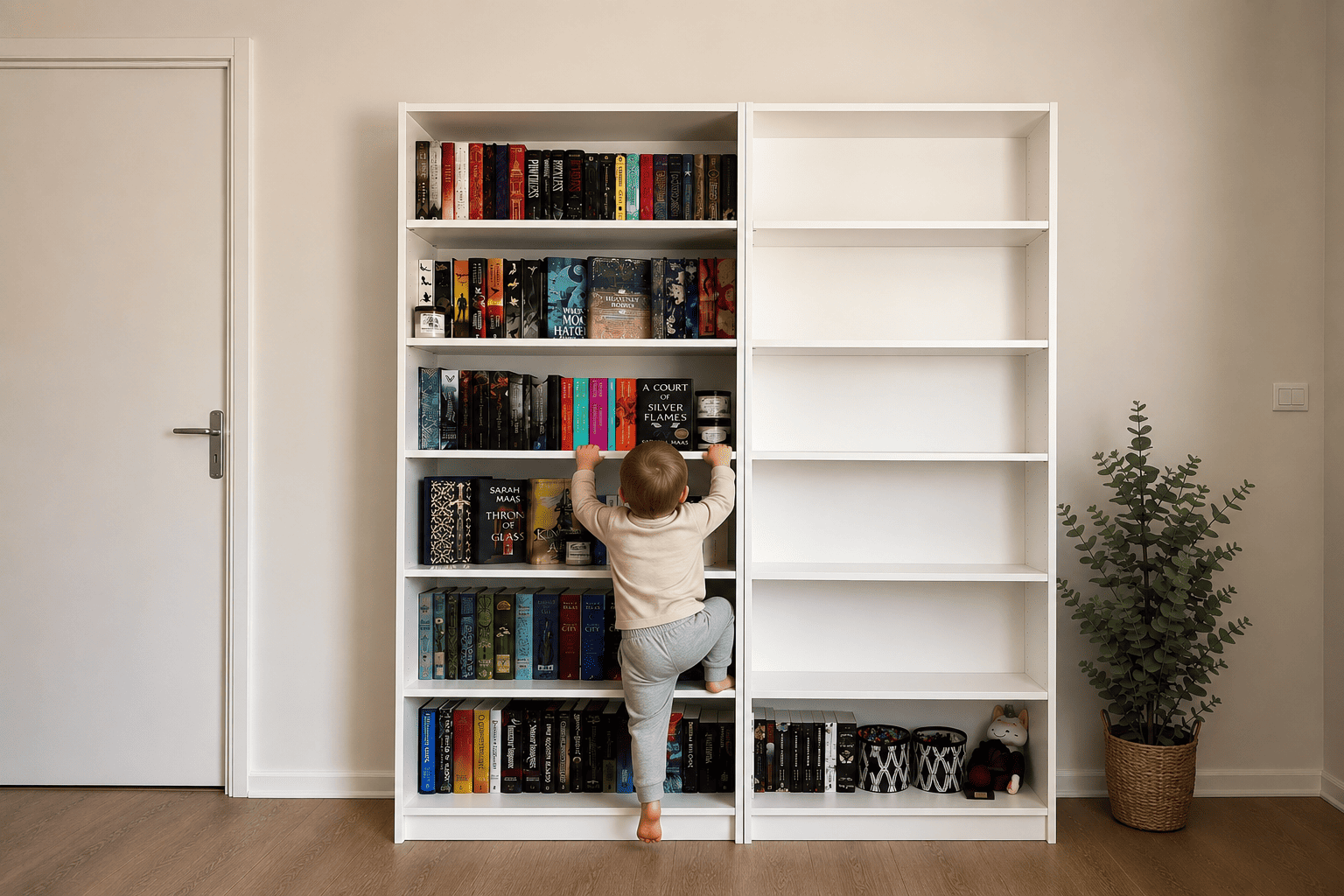
A tall bookcase filled with books may look stable, but it can tip forwards if someone pulls on it or tries to climb it. This is a particular concern in homes with young children.
Anchoring a bookshelf safely means securing freestanding furniture to the wall with a suitable anti-tip restraint. The right method depends on the bookcase, the wall construction and the fixings used. Here’s how to do it properly.
Why anchoring a bookshelf matters

A tall freestanding bookcase can tip forwards if a child climbs its shelves, someone pulls on the upper section or the furniture becomes unstable. Even a bookcase that feels solid during everyday use may not resist a sudden forward pull.
An anti-tip restraint connects the furniture to a suitable wall fixing point, helping prevent it from falling forwards.
It’s worth making one distinction clear: freestanding bookcases need protection against tipping, while wall-mounted bookshelves are already secured to the wall as part of their installation. This guide focuses on preventing freestanding furniture from tipping over.
What do you need to anchor a bookshelf?

The right hardware depends on the furniture and wall type. These are the three main categories:
- Anti-tip straps: Connect a freestanding bookcase to the wall to help prevent it tipping forwards. Many manufacturers supply them with tall furniture.
- L-brackets: Create a rigid connection between suitable furniture and the wall, where the manufacturer approves their use.
- Wall plugs and anchors: Secure the restraint to the wall. Masonry plugs suit certain brick and concrete walls, while specialist hollow-wall fixings are designed for particular plasterboard installations.
A strong strap or bracket is only effective when it’s securely attached at both ends. Follow the furniture manufacturer’s instructions and choose wall fixings suitable for the construction and intended forces.
Which fixings work with your wall?

Before drilling, identify the wall construction. Different materials require different fixings:
- Brick or concrete: Use suitable masonry fixings. Solid brick, hollow blocks and concrete may require different products.
- Plasterboard with timber studs: Fixing into a structural stud may provide a suitable attachment point when permitted by the restraint manufacturer’s instructions.
- Hollow plasterboard: Use fixings specifically approved for the wall construction and the intended application. Don’t assume every heavy-duty plasterboard anchor is suitable for anti-tip restraints.
- Older lath-and-plaster walls: Construction varies considerably. Locate suitable structural support or seek professional advice before securing heavy furniture.
If you’re unsure what’s behind the wall, don’t guess. Check for concealed cables and pipes before drilling, and ask a qualified installer for advice where necessary.
How to anchor a freestanding bookcase safely

The principle is simple: connect the bookcase to a suitable fixing point in the wall so it cannot easily tip forwards.
- Check the manufacturer’s instructions. Use the recommended anti-tip restraint and identify the approved attachment points on the furniture.
- Identify the wall type. Choose fixings suitable for the wall construction and the restraint system.
- Position the bookcase. Place it on a stable, level surface and check that it sits correctly against the wall.
- Attach the restraint. Secure it to the designated furniture attachment point and to the wall, following the manufacturer’s instructions.
- Check the installation. Make sure the restraint is correctly fitted and all connections are secure before loading the bookcase.
Keep heavier books on lower shelves to help maintain a lower centre of gravity. However, careful loading is not a substitute for an anti-tip restraint.
This advice applies to traditional freestanding furniture as well as modern designer bookcases. Always check the anchoring requirements of the specific model.
What about tall, narrow bookcases?

Tall, narrow freestanding bookcases deserve particular attention because their proportions may make them easier to tip. Secure them using the manufacturer’s specified restraint system rather than relying on their weight or the books stored inside.
For shelving made from separate sections, check whether the manufacturer requires the units to be connected and anchored individually or as a complete assembly.
A wall-mounted vertical bookcase is a different design: it is installed directly onto the wall rather than standing on the floor. Its normal mounting system should not be confused with an anti-tip restraint.
Bookshelf safety in a child’s bedroom

Children may pull on shelves or climb furniture to reach books and toys. Securing bookcases is therefore especially important in bedrooms and playrooms.
A few practical precautions can help reduce the risk:
- Anchor freestanding bookcases using the manufacturer’s recommended anti-tip system.
- Keep heavy books low and avoid placing heavy or breakable objects above beds and cots.
- Avoid climbable arrangements that encourage children to use furniture as steps.
- Keep tempting objects out of reach so children are less likely to climb shelves to retrieve them.
- Inspect restraints regularly, particularly after furniture has been moved or knocked.
For rooms where floor space is limited, properly installed small wall-mounted shelves offer another storage option. They do not need an additional anti-tip strap, but must still be securely installed and positioned away from cots, beds and furniture children could use to reach them.
How to check bookshelf anchors over time

Even a correctly anchored bookcase deserves an occasional inspection. Furniture can shift, fixings can loosen and restraints can become damaged over time.
Look for these warning signs:
- Loose screws, brackets or anti-tip straps.
- Cracks or damage around the wall fixing points.
- A restraint that has become disconnected, frayed or damaged.
- Furniture that has shifted away from its original position.
Follow the manufacturer’s inspection recommendations and check the installation after moving the bookcase or changing its contents significantly.
If a restraint appears loose or damaged, stop using the furniture until it has been properly assessed and repaired. Don’t test a questionable fixing by pulling hard on the bookcase.
Common bookshelf anchoring mistakes
Even a good anti-tip restraint can be ineffective if it’s fitted incorrectly. Avoid these common mistakes:
- Using unsuitable wall plugs: Fixings designed for solid masonry may not work in hollow plasterboard.
- Ignoring the manufacturer’s instructions: Furniture attachment points and restraint requirements vary between models.
- Attaching straps to weak panels: Use only the furniture attachment points approved by the manufacturer.
- Leaving a loose restraint in place: A damaged or insecure fixing needs proper assessment, not simply a tighter screw.
If you’re uncertain about the wall construction or the correct fixing method, consult a qualified installer.
Frequently asked questions
Can you anchor a bookcase to plasterboard?
Yes, in some circumstances, but the fixings must be suitable for the wall construction and the anti-tip restraint. Where permitted and practical, fixing into a structural stud may be preferable. Follow the relevant manufacturer’s instructions and seek professional advice if the wall’s suitability is uncertain.
Do all freestanding bookcases need an anti-tip restraint?
Freestanding bookcases should be secured against tipping in accordance with the manufacturer’s instructions, particularly tall or narrow units and furniture in homes with children. Do not assume a bookcase is safe simply because it feels heavy or stable.
How often should bookshelf anchors be checked?
Follow the manufacturer’s maintenance guidance and inspect restraints periodically. Check them again after moving furniture, changing its load or noticing any damage or movement around the fixing points.