


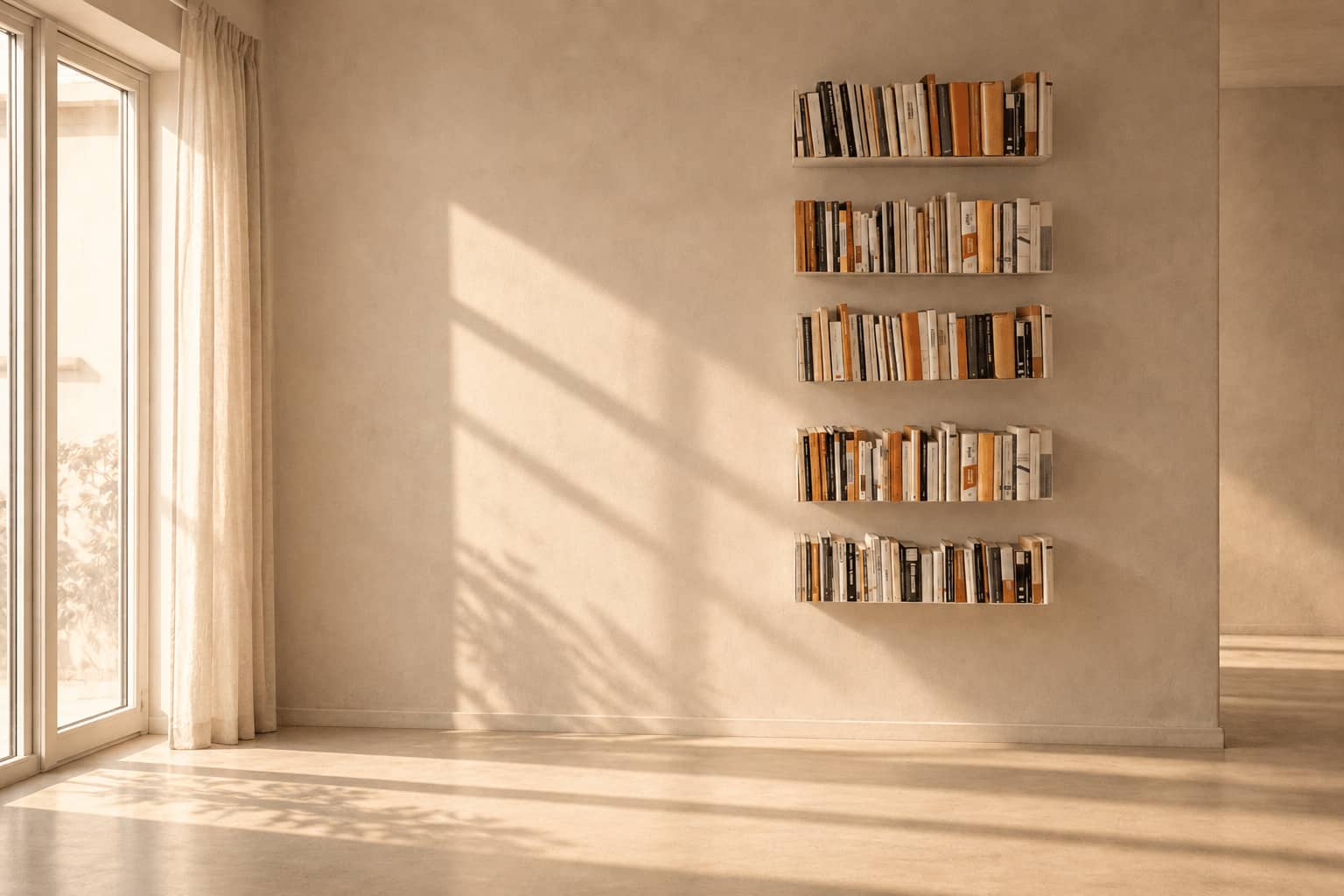
Looking for an alternative to the IKEA Billy bookcase? Billy remains a popular choice for straightforward book storage, but a traditional freestanding bookcase isn’t always the best fit. Perhaps you’re short on floor space, want to make better use of an awkward wall or simply prefer something more distinctive.
That’s where Teebooks comes in. From floating bookshelves and slim vertical displays to freestanding designs and cube bookcases, its steel shelving offers different ways to organise your collection.
Here are five Teebooks alternatives to IKEA Billy, with their main advantages, indicative UK prices and the spaces they suit best.
Why look beyond the IKEA Billy bookcase?

The IKEA Billy has an obvious appeal: it’s affordable, familiar and designed to hold plenty of books without taking over a room. The standard 80 × 28 × 202 cm version offers several shelves in a relatively compact freestanding unit, with optional doors for a more enclosed look.
Its conventional design won’t suit every room, though. The full-height frame takes up floor space, and its fixed outer dimensions can make it harder to work around windows, doors or radiators. If you want books displayed across a wall rather than contained inside a single unit, other shelving formats are worth considering.
Material is another difference. Billy uses particleboard components, while the Teebooks options featured here are based on metal shelving designs. Each approach has its place; the better choice depends on your room, budget, book collection and preferred look.
What makes a good IKEA Billy alternative?
Before swapping a traditional bookcase for something different, focus on what you actually need:
- Floor space: Wall-mounted bookshelves leave the floor clear, while freestanding bookcases offer storage without needing a wall-mounted layout.
- Book capacity: Consider the dimensions, depth and recommended load of each shelf, especially for hardbacks or larger books.
- Flexibility: Individual shelves and cube bookcases allow you to create arrangements that suit the shape of your room.
- Design: Decide whether you want a discreet floating shelf, an open bookcase or a more sculptural wall display.
- Budget: Compare the complete configuration you need, rather than the price of a single shelf against a full bookcase.
5 Teebooks alternatives to the IKEA Billy bookcase
These five shelving options offer different alternatives to Billy’s familiar full-height frame. Some make use of empty wall space; others retain the convenience of a freestanding bookcase.
1. Wall-mounted bookshelves – free up floor space

Want the books without the bulky bookcase? Wall-mounted bookshelves are a practical alternative when floor space is limited.
Teebooks metal shelves can be arranged in horizontal rows, vertical groups or staggered layouts to suit the wall. They’re particularly useful above furniture, beside a desk or in spaces where a conventional bookcase would feel too imposing.
The U60 is a good example. Measuring 60 cm long and 15 cm deep, it offers a minimalist surface for books displayed upright. Its recommended load is up to 15 kg per shelf on a solid wall with suitable fixings.
Teebooks wall-mounted bookshelf sets have an indicative starting price of £60, depending on the configuration.
Best for: Small living rooms, reading corners and anyone who wants to keep the floor clear.
Explore the Teebooks wall-mounted bookshelves collection.
2. Vertical bookcases – make the most of a narrow wall

Not enough room for an 80 cm-wide bookcase? A vertical wall-mounted bookcase uses height rather than width, making it a useful solution for narrow spaces.
Teebooks vertical shelving creates the impression of books floating in a column. It’s an eye-catching way to display a collection beside a sofa, between windows or on a wall too narrow for a conventional bookcase.
The UV60 measures 60 cm high, 15 cm wide and 15 cm deep. Its recommended load is up to 20 kg on a solid wall with suitable fixings, making it suitable for a substantial collection of paperbacks.
A set of two vertical bookcases costs around £120 as an indicative UK price.
Best for: Narrow walls, unused vertical space and floating columns of books.
See the Teebooks vertical bookcases collection.
3. Freestanding designer bookcases – keep the familiar format

Prefer a bookcase that stands on the floor? You don’t have to give up the familiar freestanding format to try a different design.
Teebooks freestanding designer bookcases offer an open, contemporary alternative to a traditional framed bookcase. Their metal construction and minimalist lines make them suitable for living rooms, home offices and reading areas.
Unlike wall-mounted shelves, a freestanding unit creates its own presence in the room. It’s a good option when you want your books to form part of the furniture rather than appear to float against the wall.
The range has indicative UK prices of approximately £183–£582, depending on the model.
Best for: Readers who want a freestanding bookcase with a more contemporary appearance.
Browse the Teebooks freestanding shelves.
4. Cube bookcases – create a flexible storage layout

If you like the organised look of a traditional bookcase but want something less conventional, cube bookcases offer a different way to arrange books and decorative objects.
Teebooks cube shelving uses geometric compartments to give a collection structure without the familiar Billy silhouette. Cubes can create a visually balanced display, with books, magazines and selected accessories arranged in separate spaces.
Depending on the model, cube bookcases can suit anything from a compact reading corner to a larger living-room display. Check each product’s dimensions and installation requirements to choose an arrangement that fits your space.
Indicative UK prices range from £139 to £669, depending on the configuration.
Best for: Organised book displays, contemporary interiors and rooms where geometric shelving adds character.
Discover the Teebooks cube bookcases and cube shelves.
5. JUDD design bookcase – five floating shelves, one clean look

Looking for a striking wall display without a traditional bookcase frame? The Teebooks JUDD is a set of five U60 wall-mounted bookshelves that creates a complete bookshelf arrangement.
Each horizontal shelf measures 60 cm long and 15 cm deep. Books stand upright, side by side, while the slim metal supports remain discreet beneath them. The shelves can be arranged at different heights to create a balanced composition across the wall.
Rather than installing a full-height freestanding unit, JUDD lets you display books directly on the wall, leaving the floor free and keeping the overall look light.
The indicative price is around £300 for the five-shelf set.
Best for: Feature walls, living rooms and anyone who wants a ready-made arrangement of minimalist floating bookshelves.
IKEA Billy alternatives compared at a glance
Here’s how the five Teebooks options compare with the familiar IKEA Billy format.
| Bookcase | Type | Indicative UK price | Best for |
|---|---|---|---|
| IKEA Billy | Traditional freestanding bookcase | See IKEA UK for current price | Simple, enclosed-frame book storage |
| Teebooks wall-mounted bookshelves | Individual or grouped floating shelves | From £60 | Saving floor space |
| Teebooks vertical bookcases | Wall-mounted vertical displays | Around £120 for two | Narrow walls and floating book columns |
| Teebooks freestanding designer bookcases | Freestanding metal shelving | £183–£582 | Contemporary floor-standing storage |
| Teebooks cube bookcases | Geometric compartment shelving | £139–£669 | Organised and decorative book displays |
| Teebooks JUDD | Set of five U60 wall-mounted shelves | Around £300 | Minimalist feature walls |
Teebooks prices are indicative and may vary depending on the model, configuration and current offers. Check the Teebooks UK website for the latest prices.
Which IKEA Billy alternative should you choose?
The best alternative depends less on the brand name and more on the space you want to furnish.
- Short on floor space? Choose wall-mounted bookshelves to make use of empty wall areas.
- Working with a narrow wall? Vertical bookcases offer a compact way to display books in a column.
- Still want a freestanding unit? A designer metal bookcase offers a different look without changing the basic storage format.
- Prefer separate compartments? Cube bookcases create an organised display for books and other objects.
- Want a feature wall? JUDD combines five horizontal floating shelves into a coordinated arrangement.
Explore the full Teebooks collection of designer bookcases to compare styles and find the right fit for your home.
Steel or particleboard: what should you consider?
Material is worth considering when choosing between a traditional bookcase and metal shelving. Particleboard allows manufacturers to produce affordable furniture in familiar shapes, while steel can be formed into slimmer shelves and open structures.
Neither material removes the need to respect the product’s recommended load. Shelf dimensions, construction, wall type and fixings all matter. For wall-mounted Teebooks shelves, the recommended loads apply to solid walls with suitable fixings; plasterboard installations require appropriate fixings and lighter loads.
For more detail on the materials and design approach, read what makes Italian-made bookshelves different.
Frequently asked questions
Are wall-mounted bookshelves a good alternative to IKEA Billy?
Yes, particularly if you want to free up floor space or arrange books around existing furniture. However, the total storage capacity depends on the number, dimensions and recommended load of the shelves you choose. A freestanding bookcase may still be more convenient if you prefer a single storage unit.
Can Teebooks shelves hold heavy books?
Different Teebooks models have different recommended loads. For example, the U60 horizontal shelf supports up to 15 kg and the UV60 vertical bookshelf up to 20 kg when installed on solid walls with suitable fixings. Always check the specification of the model you intend to buy and use a lighter load with suitable fixings on plasterboard.
What is the cheapest Teebooks alternative to Billy?
Teebooks wall-mounted bookshelf sets have an indicative starting price of £60, making them a useful option for a smaller wall display. For a complete bookcase replacement, compare the cost and capacity of the full arrangement you need rather than a single shelf.